
The Hague, the Netherlands, May 20 : Heliora Energy and the Municipality of The Hague are developing a pilot “sand battery” that stores surplus electricity and residual heat as thermal energy for later use. The project, supported through the municipality’s CO₂ reduction programme, is expected to begin testing by the end of the year at a swimming pool in The Hague.
The system addresses a growing challenge in the energy transition: renewable electricity is often generated when demand is low, while electricity grids cannot always absorb the surplus. Heliora Energy’s technology converts excess electricity directly into heat and stores it in a specialised sand mixture that can be released when energy demand is high.
The idea originated from co-founder Peter Enting’s experience in the industrial sector, where he observed that materials such as sand and slag (a waste material derived from metals) can retain heat for extended periods.
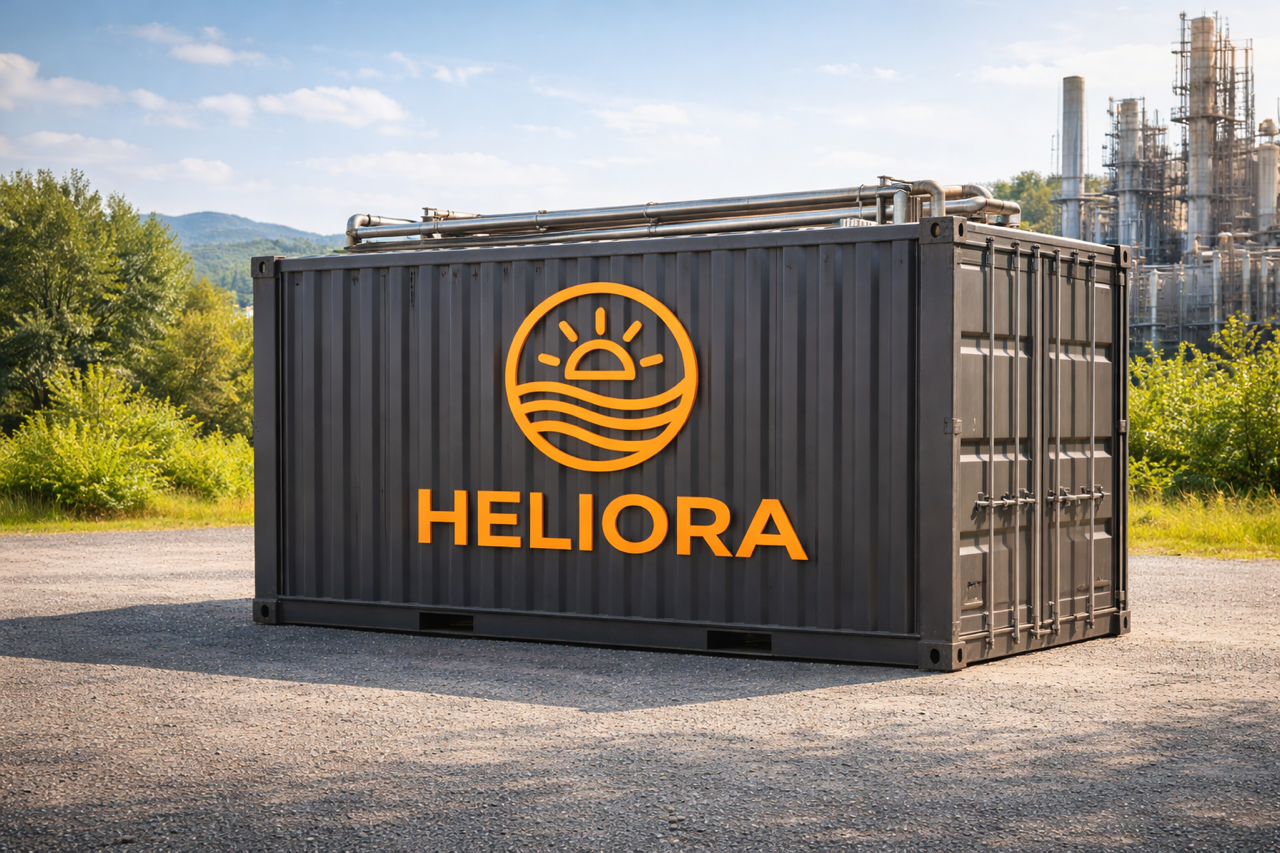
The pilot will take the form of a 20-foot container with a storage capacity of around 1 MWh, equivalent to the daily electricity use of approximately 100 households. The team expects to install it at a location with a constant heat demand, such as a swimming pool. According to Heliora Energy, one container could reduce CO₂ emissions by an estimated 20 to 35 tonnes annually, depending on how the system is operated.
“At the moment, a large share of renewable energy is curtailed or underutilised, not because it cannot be generated, but because it cannot be stored or used at the right moment,” said Enting. “Heliora’s approach focuses on bridging that gap directly in the form of heat, where demand is constant and conversion losses can be avoided.”
The project moved forward after Heliora Energy won a CO₂ reduction challenge organised by the Municipality of The Hague and ImpactCity. The initiative is part of the wider Startup in Residence Intergov programme, which connects public organisations with early-stage companies working on societal challenges.
“The energy transition is not only about producing sustainable energy, but also about using it more efficiently,” said Arjen Kapteijns, Alderman for Energy Transition, Mobility, and Resources in The Hague. “By storing residual heat, projects like this can help reduce waste and CO₂ emissions, and ease pressure on the electricity grid.”
If proven successful, the technology could support larger-scale applications in industrial sites and district heating networks, helping cities make better use of renewable energy, ease pressure on the electricity grid, and reduce dependence on fossil-based heating.