
Kuala Lumpur, June 2 (BNP): Malaysia on Monday began enforcing new regulations prohibiting children under the age of 16 from creating or maintaining social media accounts, marking a major step in the country’s effort to strengthen online safety for minors.
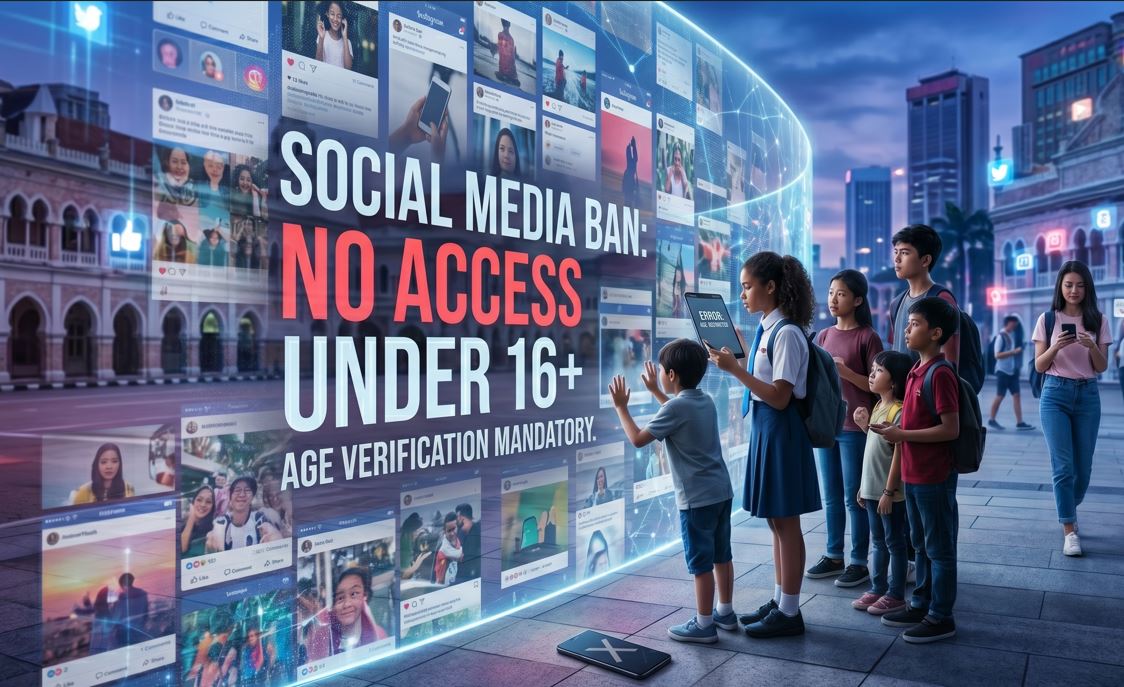
Representational image
Under the new rules, major platforms with at least eight million users in Malaysia — including Facebook, Instagram, TikTok and YouTube — are required to implement age-verification systems and prevent underage users from opening accounts. Authorities said existing users identified as younger than 16 will be given a one-month period to download or transfer personal data, including photos and videos, before restrictions take effect.
The Malaysian Communications and Multimedia Commission (MCMC) said the age-verification mechanism for current users will be introduced in phases over the next six months. Companies that fail to comply with the regulations could face fines of up to 10 million ringgit (approximately $2.5 million).
The government said the move is aimed at shielding children from cyberbullying, harmful online content and addictive platform features that encourage excessive screen time. Officials clarified that the restrictions are not intended to cut children off from digital technology but to create safer online environments and hold platforms accountable for protecting younger users.
Malaysia joins a growing list of countries, including Australia, Brazil and Indonesia, that are imposing age-based restrictions on children’s social media access. Nations such as Britain, France, Spain, Denmark, Thailand and South Korea are also exploring similar regulatory measures.
However, the move has triggered mixed reactions among families and digital rights experts. Some parents welcomed the decision, arguing that children lack the emotional maturity to safely navigate social media and benefit more from offline activities and supervised screen time.
Others expressed concern that the restrictions may be too rigid and could push teenagers toward unregulated digital spaces. Critics also raised questions about privacy, warning that mandatory age verification may require sensitive personal information and increase risks related to data protection and surveillance.
Technology companies are yet to clarify how they will implement the regulations, while experts say the effectiveness of the law may depend on enforcement mechanisms and whether families can bypass restrictions through parental accounts or alternative access methods.