Srinagar, Oct 5: Kashmir does not announce the arrival of autumn with a calendar date. Instead, the Valley seems to whisper it through nature.
A turtle dove searching for grains in freshly harvested paddy fields, the persistent chirping of cicadas hidden among willow trees and the distant calls of migratory birds crossing the night sky are among the signs that Kashmir's much-loved golden season has arrived.
Across the Valley, the landscape is slowly changing. Farmers have brought in their paddy harvest, apples are being picked from orchards and markets are filling with seasonal produce, from grapes and sweet chestnuts to lotus stems and fresh vegetables. The skies have turned a deeper blue, while the first signs of winter are beginning to appear on distant mountain peaks.
For visitors, it is the beginning of one of Kashmir's most enchanting seasons. For residents, it is a familiar transition — a time when nature, agriculture, wildlife and everyday life all begin preparing for the colder months ahead.
A Valley Painted in Gold
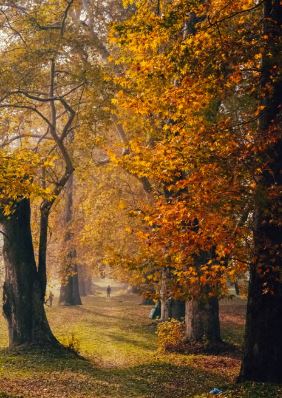
Perhaps the most striking symbol of Kashmir's autumn is the Chinar tree.
The trees that remained deep green through summer now begin their annual transformation. Their leaves gradually move through shades of yellow, amber, gold and orange before eventually taking on deeper red hues and falling to the ground.
It is this changing foliage that gives Kashmir its distinctive autumn character and makes the season particularly popular with photographers, nature lovers and travellers.
The official Srinagar district tourism information identifies September to November as the autumn season, highlighting the golden Chinar foliage, crisp weather and favourable conditions for photography and sightseeing.
But this year's autumn has arrived with an unusual twist.
Autumn, But With Summer-Like Heat
While mornings and evenings are beginning to feel cooler, daytime temperatures have remained unusually high.
Srinagar recorded 31.2 degrees Celsius on October 4, making it the city's second-highest October temperature on record. The reading surpassed the previous October high of 31.1 degrees Celsius recorded in 2008.
The unusual warmth has given this year's autumn a different feel. The familiar chill is still arriving in the mornings and evenings, but afternoons have remained remarkably warm.
Weather officials have forecast a change from October 6, with rain and thunderstorms possible and snowfall expected over some higher reaches later in the week.
When the Birds Return
Autumn is also an important season for Kashmir's birdlife.
Migratory birds begin arriving in the Valley's wetlands as they escape the harsher winter conditions of northern regions. Among the species associated with the seasonal migration are bar-headed geese, mallards, pochards, shovelers, pintails, wigeons, shelducks and teals.
Wetlands such as Hokersar, near Srinagar, play a particularly important role in this annual movement. According to the Srinagar district administration, migratory birds from Siberia and Central Asia use Kashmir's wetlands as staging and wintering grounds, with birds arriving from around September and October.
For birdwatchers, therefore, autumn offers a different way of experiencing Kashmir. The Valley is not only a landscape of mountains, lakes and Chinar trees; it is also a seasonal stopover in a much larger natural migration route.
The Soundtrack of the Season
There is something almost cinematic about autumn in Kashmir.
The soundscape changes as well. Cicadas continue their rhythmic chorus from willow trees, while migratory birds add unfamiliar calls to the night sky.
Turtle doves have also moved down from the mountains and can be seen feeding on grains left behind after the paddy harvest. Their seasonal movement is another quiet reminder that the Valley is preparing for winter.
These small changes can easily be overlooked by a hurried traveller. Yet together, they create the distinctive rhythm of Kashmiri autumn.
A Season of Harvest and Movement
Autumn is not only about scenery. It is one of the most important transition periods for life in the Valley.
The harvest season brings agricultural activity, while apple orchards remain busy with picking and sorting. Local markets showcase the produce of the season, including nadru, turnips, spinach, tomatoes, potatoes, grapes and sweet chestnuts.
The season also marks the return journey of the Bakarwal pastoral communities, who traditionally spend the warmer months with their livestock in high-altitude meadows. As winter approaches, families begin moving towards relatively warmer areas of the Jammu region with their sheep, goats and horses.
In this sense, autumn is a season of movement — birds arrive, pastoral families descend, farmers complete their harvest and nature begins its gradual preparation for winter.
Why Autumn Holds a Special Place in Kashmir
Kashmir is often associated with snow-covered mountains, spring blossoms and summer lakes. Yet autumn offers a quieter and more intimate experience.
The crowds can feel different, the landscape becomes warmer in colour and the Valley seems to slow down between the intensity of summer and the stillness of winter.
For travellers, this is a season for scenic drives, long walks, photography and simply watching the landscape change. The combination of golden Chinars, clear skies, harvested fields, mountain views and migratory birds gives Kashmir an atmosphere that cannot be replicated at any other time of year.
Nature's Gentle Reminder
Perhaps the real charm of Kashmir's autumn lies in how naturally everything happens.
There is no grand announcement. A bird arrives. A cicada begins to sing. A farmer gathers the final crop. A Chinar leaf changes colour and falls. A mountain peak turns faintly white in the distance.
Piece by piece, these ordinary moments come together to create something extraordinary.
This is Kashmir in autumn, a Valley slowly turning gold, preparing for winter while offering visitors one last, beautiful glimpse of nature at its most expressive.