
At the fifth anniversary of its Small Paws Innovation Center, Hill's releases groundbreaking research highlighting unique biological, metabolic and clinical needs in dogs under 25 pounds.
OVERLAND PARK, Kan., Nov. 5, 2026 /PRNewswire/ -- Hill's Pet Nutrition, a global leader in science-led pet nutrition, today released its landmark World of the Small Dog Report, a comprehensive, evidence-based guide redefining how veterinary teams and pet parents understand and care for small dogs.
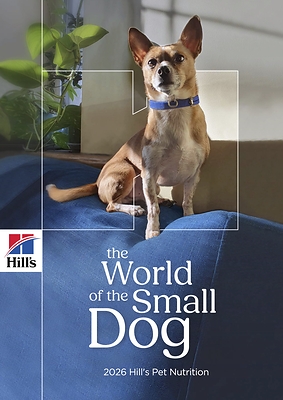
Representing more than 52% of the global canine population,1 small dogs (dogs weighing under 25 pounds) are surging in popularity due to urbanization and changing lifestyle dynamics. While small dogs enjoy significantly longer lifespans than large or giant breed dogs, they have historically been treated clinically as "scaled-down" versions of larger dogs. Hill's new, pivotal research demonstrates that small dogs possess distinct anatomical, metabolic and behavioral profiles that require targeted, precision nutrition and tailored preventive care to protect their extended healthspan.
The report was first unveiled at the fifth anniversary of Hill's Small Paws Innovation Center in Topeka, Kan., on Oct. 20. The Small Paws Innovation Center is the only facility in the U.S. dedicated exclusively to the study of small dog biology and nutrition.
"When you look at a Chihuahua, Dachshund or Pomeranian, you are looking at an animal that is intrinsically different from a large breed," said lead report author Francisco Poblanno, DVM, DVSc, Dip. ECVCN, clinical nutrition manager at Hill's. "Small dogs are not simply smaller versions of larger dogs - they possess unique metabolic rates, faster gut transit times and distinct health vulnerabilities. By understanding their specific biology, we can help find new ways to fundamentally transform their healthspan and quality of life."
Key Report Highlights:
- Metabolic & Energy Demands: On a per-kilogram basis, small dogs require roughly twice the calories of large breeds due to higher mass-specific metabolic rates and greater surface area-to-volume heat loss.2
- Dental Vulnerabilities: Due to jaw miniaturization and severe tooth crowding, small dogs are up to five times more likely to develop periodontal disease than giant breeds,3 with 97% of veterinarians identifying dental care as their primary health need.4
- Orthopedic Risks: Unique bone growth patterns and genetic traits create distinct joint challenges for small dogs. For example, small dogs are 12 times more likely than larger breeds to suffer from slipped kneecaps (medial patellar luxation).5
- Urinary & Kidney Health: Analysis of approximately 388,000 canine cases submitted to the Minnesota Urolith Center, the world's largest veterinary stone analysis laboratory located at the University of Minnesota, between 2019 and 2024 shows that small and mini dogs account for 71% of all urinary stones, with small dogs particularly vulnerable to calcium oxalate uroliths (representing 53% of stones in mini breeds).6
- Cardiovascular & Cognitive Aging: Myxomatous mitral valve disease (MMVD) accounts for more than 70% of canine heart disease, disproportionately impacting small breeds.7 Furthermore, their extended lifespans increase lifetime risk for Canine Cognitive Dysfunction (CCD).
Along with launching the report, Hill's held the inaugural meeting of its Small & Mini Advocacy Advisory Panel (SMAAP), a global collective of veterinary specialists across gastroenterology, mobility, cardiology, urinary health, dentistry and behavior. At the event, Hill's leaders explained that the creation of the report and the formation of the SMAAP represents a natural progression.
"Pioneering small dog science has been a priority for Hill's for years, leading directly to the establishment of our Small Paws Innovation Center five years ago, as the premier research hub for small breed biology," said Hill's Global Chief Veterinary Officer Dr. Karen Shenoy. "This new report and the formation of our advisory panel represent the next chapter in our ongoing commitment to leading the industry in decoding their unique health needs and delivering science-led nutrition for these much-loved pets."
Members of the SMAAP include:
- Kathrin Busch, Dr. med. vet., Diplomate ECVIM-CA (Gastroenterology – LMU Munich, Germany)
- Eva Furrow, VMD, PhD, DACVIM, DACVNU (Urinary & Nephrology – Minnesota Urolith Center, University of Minnesota, USA)
- Sun A. Kim, DVM, MS, PhD, DACVB (Behavior & Aging – Cornell University, USA/Korea)
- Jody Lulich, DVM, PhD, DACVIM (Urology – Minnesota Urolith Center, University of Minnesota, USA)
- Denis Marcellin-Little, DEDV, DACVS, DACVSMR (Mobility – UC Davis, USA)
- Cassie Panning, LVT, VTS (Nutrition), VTS (SAIM) (Clinical Communication & Nursing – AERC Minnesota, USA)
- Brittany Rigby, DAVDC (Dentistry – Alberta Veterinary Dentistry, Canada)
- Henry W. Green, III, DVM, DACVIM (Cardiology – Louisiana State University School of Veterinary Medicine, USA)
The full World of the Small Dog Report 2026 is available at hillsvet.com/caninehealth. Veterinary professionals can access related RACE-approved canine medicine education at the Hill's Veterinary Academy.
References:
1 Euromonitor International. (2025). Global dog population data. Cited in Hill's Pet Nutrition, World of the Small Dog Report (2026).
2 National Research Council. (2026). Nutrient requirements of dogs and cats. The National Academies Press. https://doi.org/10.17226/10668
3 Wallis, C., Saito, E.K., Salt, C., Holcombe, L.J., & Desforges, N.G. (2021). Association of periodontal disease with breed size, breed, weight and age in pure-bred client-owned dogs in the United States. The Veterinary Journal, 275, 105717. https://doi.org/10.1016/j.tvjl.2021.105717
4 Carmichael, M. (2025). What the future: Pets. Ipsos Research Reports, 50(1), 1-40. What the Future: Pets | Ipsos
5 Engdahl, K., Bergstrom, A., Hoglund, O.V., & Hanson, J. (2023). The epidemiology of patellar luxation in an insured Swedish dog population. Preventive Veterinary Medicine, 220, 106034. https://doi.org/10.1016/j.prevetmed.2023.106034
6 Minnesota Urolith Center.(2024). Canine urolithiasis analysis data (2019 - 2024). Cited in Hill's Pet Nutrition, World of the Small Dog Report (2026).
7 Parker, H.G. & Kilroy-Glynn, P. (2012). Myxomatous mitral valve disease in dogs: Does size matter? Journal of Veterinary Cardiology, 12(1), 19-29. https://doi.org/10.1016/j.jvc.2012.01.006
About Hill's Pet Nutrition
Founded more than 75 years ago with an unwavering commitment to science-led pet nutrition, Hill's Pet Nutrition is on a mission to help enrich and lengthen the special relationships between people and their pets. Hill's is dedicated to pioneering research for dogs and cats using a scientific understanding of their specific needs. As a leading veterinarian-recommended pet food brand, knowledge is our first ingredient with nearly 200 veterinarians, PhD nutritionists and food scientists working to develop breakthrough innovations in pet health. Hill's Prescription Diet therapeutic nutrition plus our everyday wellness product line, Hill's Science Diet, are sold at vet clinics and pet specialty retailers worldwide. For more information about our products and nutritional philosophy, visit HillsPet.com.
MEDIA CONTACT:
Melissa Chesnut
Global Corporate Communications Director
mediacontact@hillspet.com

 View original content to download multimedia:https://www.prnewswire.co.uk/news-releases/hills-pet-nutritions-world-of-the-small-dog-report-reveals-new-emerging-scientific-standards-for-small-dogs-302929806.html